Showing posts with label chess. Show all posts
Friday, April 1, 2016
Tuesday, March 29, 2016
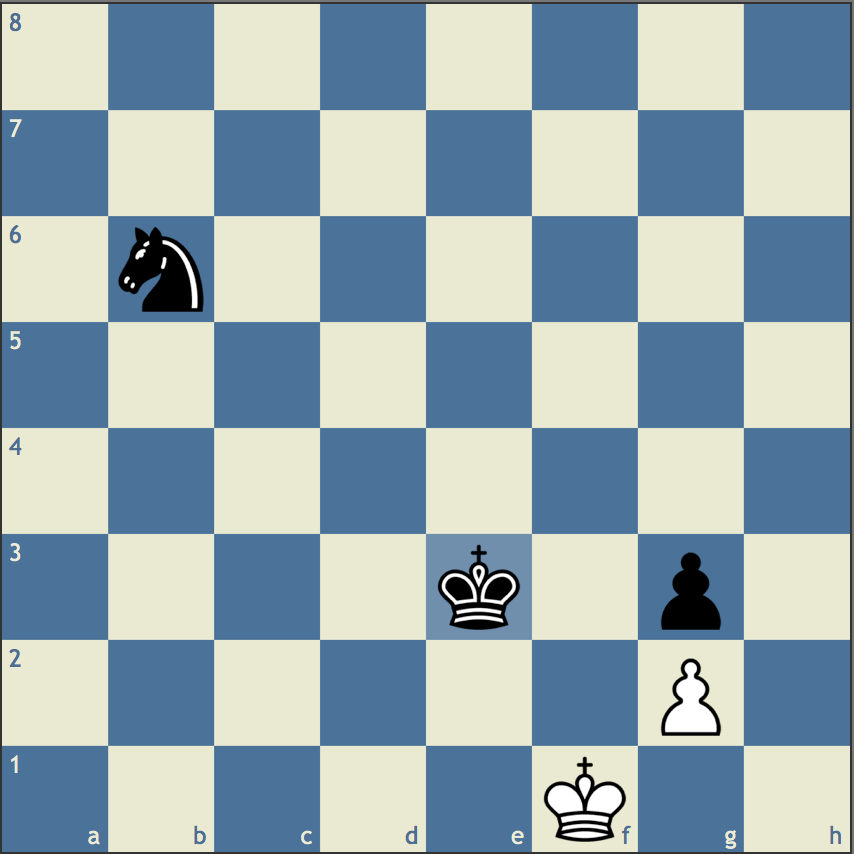
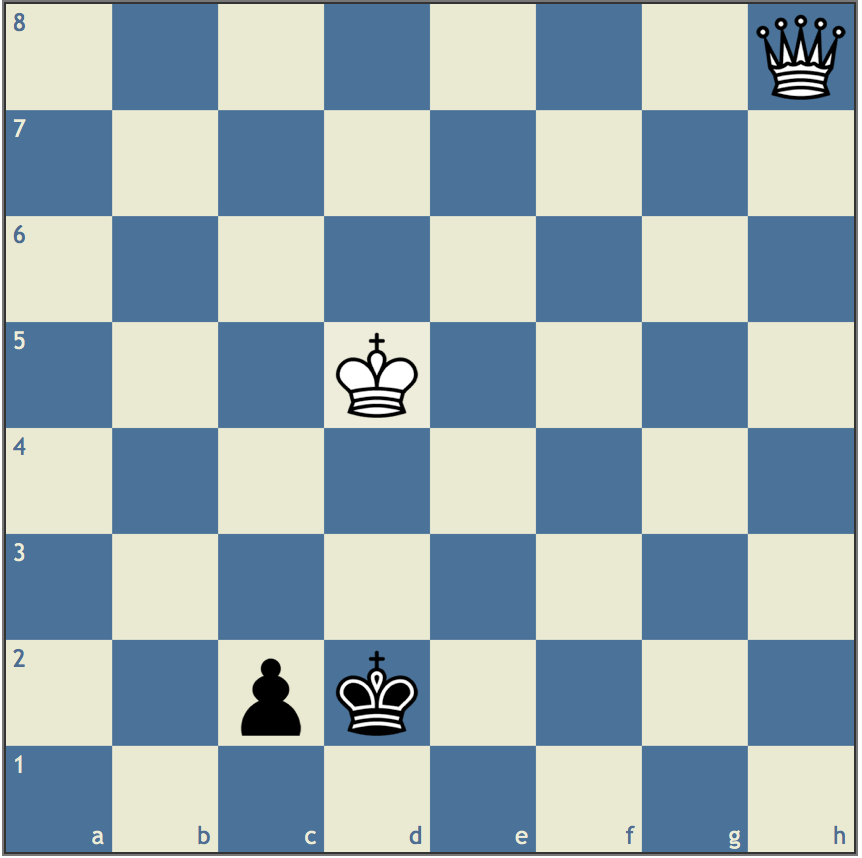
Fundamental Chess Endgames part 1
- Is it a draw or win for Black? Why?
- White to play and win
- Black to play, can he hold? In general, in this type of endgame, what is the scenario the defender should avoid?
- White to move, is it a draw?
- White to move, can he win?
- Black to move, is it holdable?
- White to play, what should he do?
- Black to move, is it a draw?
Wednesday, April 9, 2014
How Good Can You Be at Chess?
First, learn the meaning of the chess categories and ratings*:
* The following are international (FIDE) ratings and may not align exactly with rating systems used by countries that use other rating systems, such as the United States.
- beginner < 1300 rating (or no rating, no tournament yet)
- amateur = 1300-1699
- club player = 1700-2000
- good player, first category = 2001-2199
- Candidate master = 2200-2299
- FIDE master = 2300-2399
- International Master = 2400 - 2499
- Grand Master = 2500-2599
- Top Grand Master = above 2600 rating
With a 2650 rating, Andrei Istratescu, the head of International Chess School, is one of the best top grandmasters in the world.
Almost every young chess player at one time wants to become a grandmaster or get from 1400 to 2500 rating as quickly as possible. Some people ask us what to do to become a grandmaster in a year. Others, more ambitious, want to become grandmasters in a few weeks. It is understandable that people want to get on the top of pyramid as quickly as possible.
However, "Rome wasn't built in a day".
In any competitive domain, be it medicine or physics, be it athletics or tennis, it takes at least 10 years to become an "expert". Fortunately, chess is also a competitive domain with more and more people attracted by its beauty every year.
Even the chess prodigies of today become grandmasters after years and years of intensive study and after participating in strong competitions.
Most of us have many other duties, thoughts, and concerns. Many of us do not have the time to study chess hours every day. Many of us do not have time to participate 1/4 of the year in competitions.
Ok, so how good can you become at chess?
The most important factors have to do with time and age. Let's see:
1) How much do you study?
Two hours per week are usually enough for a busy person to make sensible progress in chess if he follows a structured program of study and training.
Dedicating 6 hours per week is a great time budget for study by someone striving to achieve great results relatively quickly.
2) How much do you play?
There is a common misbelief that 5-7 tournaments per year are necessary to have any chance to become an International master. This is far from true and the proof is that there are old grand masters who were happy to play one tournament per year. More important is to be prepared for the tournaments you do play in and to go there with all your forces charged at maximum.
3) How old are you?
It is again wrong to believe that chess cannot be learned at older ages. A young person does indeed have a better memory but an older person has better logic and a more organized thinking.
Other factors such as your talent, memory, nerves, and attention are also important. But if you acknowledge which are your personal weaknesses, you can diminish them. For example, if you do not have a good memory, you should not play sharp, critical openings. If your attention is a problem, play the move in your head first as if you had played it on the board, wait a few seconds and play it later for good. If you are tense, avoid a time crisis or don't be interested in looking into your opponent's eyes...
Finally, you can become as good as you are serious.
What a Chess Grandmaster Does
Someone who wants to become a grandmaster must dedicate many hours every day for study and constantly participate in strong tournaments. During the night they usually dream chess positions and opening variants. They must have a fantastic memory and nerves of steel. They also need a partner for study and training of at least the same level. The hobby becomes a passion and the training becomes a way of living.Chess is a great hobby for all of us
The path to improvement is more fun than the result. Chess is a great hobby, no matter your rank as you always compete against people of the about the same level as you. Your hobby is highly intellectual; it keeps your mind active and healthy.
And as it is so complex, every step you make forward to understand it better, to discover its secrets, will bring you more joy and reveal more of the game’s beauty.
If you want to obtain great results in only 1 year, check out our Grandmaster Package.
Also, learn how to improve at chess.
source: chessmasterschool
"How do I become a Grandmaster?" by Daaim Shabazz, Ph.D.
|
||||||||||||||||||||||
|
||||||||||||||||||||||
|
||||||||||||||||||||||
|
||||||||||||||||||||||
|
||||||||||||||||||||||
|
||||||||||||||||||||||
| ||||||||||||||||||||||
Friday, April 4, 2014
Thursday, April 3, 2014
How To Deal With Time Trouble? (by GM Igor Smirnov)
Recently, I received a couple e-mails from students who are having a
hard time dealing with time trouble. And if you are one of those chess
players who succumb to this dilemma often, then you are in for a treat.
Right here, I will lay down certain tips and tricks that will help you
combat this OTB problem.
Very often, we see the following situation: a player plays a good game, gets an advantage, but then appears in time trouble! Under time pressure, he makes an annoying mistake and even loses in the end!
Such a situation is certainly frustrating. And the recommendations I’m about to give will help set yourself free from the chains of time trouble.
First and foremost, there is a great difference between thinking and having doubts.
In most cases, a chess player THINKS only during the first few minutes after the opponent makes his move. After that, he starts to check the SAME variations again and again. Not contented, he starts to worry about the consequences, and try to find 100% ideal move, and the cycle goes on and on.
Guess what? This cycle doesn’t help at all! This only creates chaos in his head and totally mixes things up. Finally, after going through the same variations, worrying about the consequences, and vainly searching for the perfect move, he does something ridiculous… and you should know what happens next.
To avoid this typical, VERY frustrating, and game-breaking scenario, keep these in mind:
–> Do NOT calculate 1 variation 2 times. You may not be the BEST calculator around but when you sit at the board, you only have yourself to trust.
–> In most cases you should NOT spend more than 3 minutes on 1 move. You may need to spend more time on crucial and highly tactical positions, but 3 minutes is the average for every move.
This also brings us to the next advice:
Use your intuition.
Look, even a computer – whether it’s Rybka, Fritz, or even that supercomputer Hydra, CANNOT calculate all of the lines until the end and come to a 100 percent correct conclusion. That said, trying to judge the outcome of the game for MANY moves ahead is a wasted effort.
Oftentimes, you will find yourself in a situation where you have 2 or 3 logical moves and there’s no way you can calculate the lines until the end or come to a certain conclusion.
What to do?
Use your intuition! This means you should choose a move, which came to your mind FIRST (which seemed good for you at first sight on a position) and then do only the needed calculation to verify that the move is tactically sound. This is a very powerful advice! Check it in your practice, and you’ll see that it works great!
And another piece of advice: Make normal moves.
Most often, a game is decided by a mistake of one player (NOT by a brilliant play of his opponent). That said, it’s more important to avoid mistakes, than to find 100% perfect moves all the time.
Don’t be too harsh on yourself. Don’t try to make 100% correct moves all the time. NORMAL move is good enough in most cases.
Even the greatest players like Karpov follow this advice! The former World Champion, when faced with a branching point in one of his games, go for the sound, normal, and generally good move… the one that requires the least amount of calculation.
He didn’t win ALL of his games, BUT he won MOST of them. Heck! He was a former World Champion. You’d do great by following his footsteps.
——————————
Let me tell you 1 little story.
Recently I got a message from a chess player, a close follower of my blog to be precise. He explained his chess problems, and one of them was constant time trouble. I recommended one of my chess courses, which contains the answers to most of his questions.
He answered: “Yes, I was thinking about your courses since the last month, but couldn’t decide which one to start with!”
I can’t but smile and laugh a bit. It’s not surprising that he has a time trouble in chess, isn’t it?
He thought about 1 simple decision during more than a month!!!
In an old manual for Samurais, I found the following quote: (chess is a model of war by the way, so samurai’s wisdom is suitable for chess)
“Man should make a decision during 7 breathing in. If thinking takes too long, the result will be lamentable.”
So the 4th advice is: Decide and do it quickly!
If you have time troubles in chess, then you probably have problems when it comes to making decisions in life. Procrastination is a habit you want to get rid of.
I know many people who spent tons of time to decide which of my courses to order. Meanwhile, they lost the most important thing – TIME. It was much better to make ANY decision, but to make it quickly and to start going forward.
ANY decision moves you forward! If your decision was wrong, then you will know that this thing does not work. You learn something from it, and it’s going to be useful in the future. Then you will start finding another solution and you will always keep going forward!
On the other hand, the one who doesn’t make a decision (or postpone it) will be stuck on his current place. He’ll have no progress whatsoever!
That person who goes forward (who makes a decision and learns from it), will easily outrun him!
Another example: some people wait several months to get my course with a discount. Again, they will save a few bucks, but lose TIME.
I strongly advice that you make decisions, and make them quickly! ANY decision is better than nothing!
For example, if you think that my lessons don’t help you – reject them completely. Unsubscribe from my mailing list and start searching for something else.
If you think that my lessons are useful – then what are you waiting for?! Order the complete chess courses (LINK) and start studying them NOW! If you only read these blog-posts, you still get something useful, BUT it’s very little compared to what my complete chess courses offer. Of course, I keep the better and BIGGER stuff in my complete courses.
Make a decision!
Very often, we see the following situation: a player plays a good game, gets an advantage, but then appears in time trouble! Under time pressure, he makes an annoying mistake and even loses in the end!
Such a situation is certainly frustrating. And the recommendations I’m about to give will help set yourself free from the chains of time trouble.
In most cases, a chess player THINKS only during the first few minutes after the opponent makes his move. After that, he starts to check the SAME variations again and again. Not contented, he starts to worry about the consequences, and try to find 100% ideal move, and the cycle goes on and on.
Guess what? This cycle doesn’t help at all! This only creates chaos in his head and totally mixes things up. Finally, after going through the same variations, worrying about the consequences, and vainly searching for the perfect move, he does something ridiculous… and you should know what happens next.
To avoid this typical, VERY frustrating, and game-breaking scenario, keep these in mind:
–> Do NOT calculate 1 variation 2 times. You may not be the BEST calculator around but when you sit at the board, you only have yourself to trust.
–> In most cases you should NOT spend more than 3 minutes on 1 move. You may need to spend more time on crucial and highly tactical positions, but 3 minutes is the average for every move.
This also brings us to the next advice:
Look, even a computer – whether it’s Rybka, Fritz, or even that supercomputer Hydra, CANNOT calculate all of the lines until the end and come to a 100 percent correct conclusion. That said, trying to judge the outcome of the game for MANY moves ahead is a wasted effort.
Oftentimes, you will find yourself in a situation where you have 2 or 3 logical moves and there’s no way you can calculate the lines until the end or come to a certain conclusion.
What to do?
Use your intuition! This means you should choose a move, which came to your mind FIRST (which seemed good for you at first sight on a position) and then do only the needed calculation to verify that the move is tactically sound. This is a very powerful advice! Check it in your practice, and you’ll see that it works great!
Most often, a game is decided by a mistake of one player (NOT by a brilliant play of his opponent). That said, it’s more important to avoid mistakes, than to find 100% perfect moves all the time.
Don’t be too harsh on yourself. Don’t try to make 100% correct moves all the time. NORMAL move is good enough in most cases.
Even the greatest players like Karpov follow this advice! The former World Champion, when faced with a branching point in one of his games, go for the sound, normal, and generally good move… the one that requires the least amount of calculation.
He didn’t win ALL of his games, BUT he won MOST of them. Heck! He was a former World Champion. You’d do great by following his footsteps.
——————————
Let me tell you 1 little story.
Recently I got a message from a chess player, a close follower of my blog to be precise. He explained his chess problems, and one of them was constant time trouble. I recommended one of my chess courses, which contains the answers to most of his questions.
He answered: “Yes, I was thinking about your courses since the last month, but couldn’t decide which one to start with!”
I can’t but smile and laugh a bit. It’s not surprising that he has a time trouble in chess, isn’t it?
In an old manual for Samurais, I found the following quote: (chess is a model of war by the way, so samurai’s wisdom is suitable for chess)
“Man should make a decision during 7 breathing in. If thinking takes too long, the result will be lamentable.”
If you have time troubles in chess, then you probably have problems when it comes to making decisions in life. Procrastination is a habit you want to get rid of.
I know many people who spent tons of time to decide which of my courses to order. Meanwhile, they lost the most important thing – TIME. It was much better to make ANY decision, but to make it quickly and to start going forward.
ANY decision moves you forward! If your decision was wrong, then you will know that this thing does not work. You learn something from it, and it’s going to be useful in the future. Then you will start finding another solution and you will always keep going forward!
On the other hand, the one who doesn’t make a decision (or postpone it) will be stuck on his current place. He’ll have no progress whatsoever!
That person who goes forward (who makes a decision and learns from it), will easily outrun him!
Another example: some people wait several months to get my course with a discount. Again, they will save a few bucks, but lose TIME.
I strongly advice that you make decisions, and make them quickly! ANY decision is better than nothing!
For example, if you think that my lessons don’t help you – reject them completely. Unsubscribe from my mailing list and start searching for something else.
If you think that my lessons are useful – then what are you waiting for?! Order the complete chess courses (LINK) and start studying them NOW! If you only read these blog-posts, you still get something useful, BUT it’s very little compared to what my complete chess courses offer. Of course, I keep the better and BIGGER stuff in my complete courses.
Make a decision!
Our life consists of TIME: years, months, days, minutes…
Thus a loss of time shortens your life.
A loss of time is a little suicide.
So make decisions. And make them quickly!
Thus a loss of time shortens your life.
A loss of time is a little suicide.
So make decisions. And make them quickly!
Time Management by Joel Benjamin
Time management is a difficult issue for players of different levels and ages. Playing too slowly can be just as damaging as playing too fast, and often more difficult to cure.
The first part of the problem lies in all that time you spend on “evaluation.” I’m not sure what the term, as you use it, includes. Deciding how you stand can be useful, but it shouldn’t take very long, and you need not do it every move. I suspect you are including making plans in “evaluation,” but the same comment holds there as well. If you spend a few minutes planning on one move, you most likely don’t have to spend any time there on the next one. Most of the time, your ideas will still be good. If the position changes significantly you may need to make new plans, but that won’t be every move.
You want your thought process to be as efficient as possible. It should go something like this:
1) Examine your opponent’s move to see how it affects the position (does it threaten something, or prevent your plans?).
2) Look for “candidate moves.” This process doesn’t have to exhaustive and should take less than a minute. Two to four candidates should be enough for most moves. Analyze the ones that look best to you, and try not to jump back and forth too much. Don’t feel you have to spend a lot of time (if any at all) on choice #4 if the first option looked really good after a bit of analysis.
3) Make your decision and do a final check for safety before playing your move.
In a slow time control game (say forty moves in two hours, but not game/30) it is okay to have an occasional long think. But you should only do that if the position is critical, or the choice between two moves can lead to very different positions. Most of the time you can trust your intuition or instinct.
That, I think, is really the problem. Choosing a move doesn’t require so much time. You probably need to trust your judgment more, and not try to make a perfect move every time. Excessive time usage is usually mostly about confidence in making decisions. Use a combination of your gut instinct and brief calculation (only extensive calculation if the position really demands it) and your moves will probably come out fine. In fact, the moves late in the game will probably be better…because you will actually have some time left to think!
Tuesday, June 25, 2013
Vua cờ chớp Lê Quang Liêm thi đấu giao lưu với người hâm mộ
Cờ vua là môn thể thao trí tuệ bậc nhất hiện nay. Giải vô địch cờ vua đầu tiên trên thế giới diễn ra vào năm 1886 và Wilhelm Steinitz là nhà vô địch thế giới vào năm đó. Năm 1924, Liên đoàn Cờ vua Thế giới viết tắt là FIDE ra đời. Từ đó đến nay, môn cờ vua luôn phát triển với nhiều nội dung và nhiều giải đấu đẳng cấp thế giới.
Việt Nam
là một trong những quốc gia có môn cờ vua phát triển mạnh, đặc biệt kể
từ khi vận động viên Đào Thiên Hải trở thành đại kiện tướng quốc tế đầu
tiên của Việt Nam cách đây 20 năm. Suốt 20 năm qua, cờ vua Việt Nam phát
triển không ngừng và luôn là đối thủ đáng gờm nhất của cờ vua Trung
Quốc ở khu vực châu Á. Không chỉ thế cờ vua Việt Nam còn giành được vị
trí cao trên toàn thế giới qua các giải đấu lớn.
Đến nay,
làng cờ vua Việt Nam đã có những cái tên như Nguyễn Ngọc Trường Sơn,
Phạm Lê Thảo Nguyên, Võ Thị Kim Phụng, Dương Thế Anh, Trần Thanh Tú,
Nguyễn Đức Hòa là những kỳ thủ trẻ đã tạo được tiếng vang trên các đấu
trường quốc tế. Năm 2012 vừa qua, chúng ta đã chứng kiến kỳ thủ nhí
Nguyễn Anh Khôi giành giải vô địch giải U10 thế giới. Song vận động viên
có nhiều sức hút hơn cả chính là siêu đại kiện tướng Lê Quang Liêm,
người mang về cho cờ vua Việt Nam chức vô địch Giải cờ chớp thế giới
vừa diễn ra ở Nga vào trung tuần tháng 6 vừa qua. Với thành tích này, Lê
Quang Liêm đã làm rạng danh làng cờ Việt Nam khiến người hâm mộ nước
nhà tỏ ra rất vui mừng.
Để đáp
lại sự quan tâm đặc biệt của người hâm mộ dành cho kỳ thủ số một Việt
Nam, Trung tâm cờ vua Quốc tế phối hợp cùng Trường Đại học Nguyễn Tất
Thành và trường Tiểu học Anh – Việt – Mỹ đã tổ chức buổi thi đấu giao
lưu với siêu đại kiện tướng Lê Quang Liêm.
Trong
chương trình có 40 người hâm mộ thi đấu với Lê Quang Liêm và ba kiện
tướng khác gồm: kiện tướng quốc tế Nguyễn Đức Hòa, kiện tướng FIDE Thần
Thanh Tú và kiện tướng quốc tế Dương Thế Anh. Mỗi kiện tướng sẽ thi đấu
với 10 đối thủ. Cùng với đó, người hâm mộ sẽ cùng thần tượng Lê Quang
Liêm phân tích các thế cờ qua thể loại cờ nói lần đầu tiên xuất hiện ở
Việt Nam. Ngoài ra, Ban tổ chức còn giới thiệu cuốn sách Cờ vua cho mọi người của
kiện tượng quốc tế Phạm Bích Ngọc (đương kim vô địch cờ nhanh toàn quốc
2013), đồng thời là Tổng giám đốc Trung tâm Cờ vua Quốc Tế.
Đến tham
dự buổi giao lưu có những khách mời là ông Nguyễn Phước Trung − Tổng
thư ký Liên đoàn cờ vua TP. HCM, tiến sĩ Nguyễn Mạnh Hùng – Hiệu trưởng
trường Đại học Nguyễn Tất Thành, kiện tướng quốc tế Vũ Thị Kim Phụng −
người từng giành 2 huy chương vàng giải vô địch cờ vua U20 châu Á cùng
nhiều kiện tướng khác.
Buổi
giao lưu thi đấu với siêu đại kiện tướng Lê Quang Liêm đã để lại trong
lòng người hâm mộ niềm tin vững chắc vào môn cờ vua Việt Nam trên đấu
trường thế giới. Chắc chắn những thành công của Lê Quang Liêm sẽ là động
lực để các kỳ thủ khác của Việt Nam tiến xa hơn.
Hữu Nam
Quay phim: Ngọc Khoa
Nguồn: Thế giới văn hóa
Lê Quang Liêm “đấu” cùng lúc trên hàng chục bàn cờ
Sáng 23-6, tại
Trường ĐH Nguyễn Tất Thành (Q.4, TP.HCM) vừa diễn ra chương trình “Ngày
hội cờ vua – sân chơi trí tuệ” với sự tham gia của hơn 300 bạn trẻ.
Tại chương trình, các bạn trẻ giao lưu
với Lê Quang Liêm và các đại kiện tướng quốc tế khác: Phạm Bích Ngọc,
Nguyễn Đức Hòa, Trần Thanh Tú… Bạn trẻ hâm mộ cờ được trực tiếp xem ván
cờ vua của Nguyễn Đức Hòa và Fide Trần Thanh Tú với sự phân tích, bình
luận của Lê Quang Liêm. Bên cạnh đó, nữ kiện tướng Phạm Bích Ngọc giới
thiệu và tặng 50 quyển sách “Cờ vua dành cho mọi người” do chính cô
viết.
Trong chương trình, Lê Quang Liêm và các
đại kiện tướng cờ vua khác trực tiếp thi đấu cùng lúc trên 40 bàn cờ
với người hâm mộ là các sinh viên, học sinh.
Đặc biệt, các bạn trẻ được tìm hiểu cờ
nói, lần đầu tiên xuất hiện tại Việt Nam, được Nguyễn Đức Hòa và Trần
Thanh Tú biểu diễn. Sau 5 nước đi, hai kỳ thủ này sẽ cùng phân tích và
nói ra những suy nghĩ, đánh giá thế trận, lạc quan hay bi quan về thế cờ
của mình… Lê Quang Liêm là người phân tích xuyên suốt ván cờ.

Lê Quang Liêm bình luận thế cờ giữa kiện tướng quốc tế Nguyễn Đức Hòa và kiện tướng Fide Trần Thanh Tú – Ảnh: Thanh Vũ
Lê Quang Liêm chia sẻ cùng các bạn trẻ
đam mê cờ vua: “Nếu yêu thích cờ vua, bạn có thể theo đuổi vì cờ vua là
môn thể thao ít tốn kinh phí đầu tư về vật chất. Chỉ cần bạn đam mê và
biết học hỏi cũng như sắp xếp thời gian chơi cờ hợp lý là có thể thành
công”.
Đây là hoạt động do Hội Cờ vua thuộc Trung tâm Đào tạo cờ vua quốc tế – phối hợp cùng Trường ĐH Nguyễn Tất Thành tổ chức.
THANH VŨ
Nguồn: Tuổi trẻ
VN lại thắng lớn ở Giải vô địch cờ vua trẻ Đông Nam Á
22/06/2007 1:00
Sau khi thắng áp đảo ở nội dung cờ nhanh và truyền thống, các kỳ thủ VN tiếp tục đại thắng ở nội dung cờ chớp kết thúc vào hôm qua, tại Thái Lan, khi đoạt thêm 24 HC vàng ở các nhóm tuổi.
![]() |
| Trần Thanh Tú - HC vàng U18 nam, nội dung cờ chớp. |
Ở lứa tuổi U10 nam, 3 kỳ thủ Lê Hữu Thái,
Phạm Nguyễn Hoàng Duy, Trần Tuấn Minh cùng 5,5 điểm và cùng đoạt HC
vàng. Ở lứa tuổi U8 nữ, Huỳnh Thu Trúc và Nguyễn Thanh Thủy Tiên cùng
đoạt HC vàng với 6 điểm.
Tương tự, Ngô Diệu Hoa và Tôn Nữ Hồng Ân
cùng đoạt HC vàng U16 nữ với 5,5 điểm. Các gương mặt khác tiếp tục đoạt
HC vàng cho cờ vua VN là: Hoàng Thị Như Ý (U14 nữ), Nguyễn Trần Ngọc
Thúy (U12 nữ), Vũ Thị Diệu Ái (U10 nữ). Trần Thanh Tú (U18 nam), Lê
Quang Liêm (U16 nam), Nguyễn Hoài Nam (U14 nam), Chế Quốc Hữu (U12 nam).
Ngoài ra các kỳ thủ VN cũng đoạt tất cả các HC vàng ở nội dung đồng
đội.
(Theo Thanh Niên)
Nguồn: Vnexpress
Vietnam to host world chess championship qualifiers
January 4, 2007 by thanhniennews
Over a hundred masters from 15 countries and territories in zone 3.3 will compete for three spots – two for men’s and one women’s – to advance to the World Chess Championship 2007 to be held in Mexico in September.
|
|
Vietnamese grand master Dao Thien Hai |
They include Dao Thien Hai, Nguyen Anh Dung, Nguyen Ngoc Truong Son, Le Quang Liem, Duong The Anh, Tran Thanh Tu, Le Kieu Thien Kim, Nguyen Thi Thanh An, Hoang Bao Tram, and Le Thi Ha.
Fifteen national chess federations classified in zone 3.3 by FIDE are Brunei, Taiwan, Hong Kong, South Korea, Indonesia, Japan, Korea, Macau, Malaysia, Mongolia, Myanmar, the Philippines, Thailand, Cambodia and Vietnam.
At the Southeast Asian Games in 2005 held in the Philippines, Vietnam dominated after gaining an absolute victory in all eight chess events.
Reported by Quang Huy – Translated by Minh Phat
Source: Vietnambreakingnews
Cờ nói lần đầu tiên xuất hiện tại Việt Nam
Cờ
nói một loại hình thi đấu cờ tương đối mới lần đầu tiên xuất hiện tại
Việt Nam vừa được biểu diễn tại trường ĐH Nguyễn Tất Thành.
Siêu kiện tướng Lê Quang Liêm giao lưu cùng các bạn trẻ
Các bạn trẻ hâm mộ cờ được trực tiếp xem ván cờ
vua của Nguyễn Đức Hòa và Fide Trần Thanh Tú với sự phân tích, bình luận
của Lê Quang Liêm. Sau 5 nước đi, hai kỳ thủ này sẽ cùng phân tích và
nói ra những suy nghĩ, đánh giá thế trận, lạc quan hay bi quan về thế cờ
của mình... Siêu đại kiện tướng Lê Quang Liêm sẽ là người phân tích
xuyên suốt ván đấu. Đây là hoạt động mới và hấp dẫn thu hút hơn 300 bạn
trẻ tham gia tạichương trình “Ngày hội cờ vua - sân chơi trí tuệ”.
Lê Quang Liêm bình luận các thế cờ
Tại chương trình, rất nhiều bạn trẻ hâm mộ cờ vua
được giao lưu, chia sẻ và trao đổi kinh nghiệm cùng tân vô địch thể thể
loại cờ chớp Lê Quang Liêm. Quang Liêm và các kiện tướng quốc tế sẽ
trực tiếp giao đấu giao lưu cùng lúc hơn 40 bàn cờ cùng các bạn học
sinh, sinh viên. Bên cạnh đó, nữ kiện tướng Phạm Bích Ngọc giới thiệu và
tặng 50 quyển sách “Cờ vua dành cho mọi người” do chính cô viết.
Kiện tướng quốc tế Nguyễn Đức Hòa và Fide Trần Thanh Tú thi đấu trực tiếp với thể loại cờ nói
Đây là hoạt động do Hội Cờ vua thuộc Trung tâm Đào tạo cờ vua quốc tế phối hợp cùng Trường ĐH Nguyễn Tất Thành tổ chức.
VIÊN VIÊN
Nguồn: Báo Mực Tím
Lê Quang Liêm "đại chiến" với các kỳ thủ nhí
(TNO) Trong khi những kỳ thủ lớn tuổi nhanh chóng bị các kiện tướng đánh bại, nhiều em nhỏ chưa đầy 10 tuổi lại được các kiện tướng đánh giá… là “đáng gờm”.
Sáng nay 23.6, siêu đại kiện tướng quốc tế Lê Quang Liêm cùng các kiện tướng quốc tế Nguyễn Đức Hòa, Dương Thế Anh và kiện tướng Fide Trần Thanh Tú đã có một buổi thi đấu cờ vua bất ngờ với các kỳ thủ nhí tại Trường ĐH Nguyễn Tất Thành (TP.HCM).Buổi thi đấu cờ vua là một trong những hoạt động trong chương trình giao lưu do Hội cờ vua TP.HCM, Trường ĐH Nguyễn Tất Thành và Trường tiểu học Anh-Việt-Mỹ tổ chức.
![]() Có 4 dãy thi đấu, mỗi dãy sẽ có 10 kỳ thủ đấu cùng 1 kiện tướng |
Sau khoảng 15 phút, những người thách đấu với kiện tướng Nguyễn Đức Hòa, Trần Thanh Tú và Dương Thế Anh nhanh chóng bị đánh bại.
Trong đó nổi bật em Lê Thành Công (13 tuổi), một trong những người thách đấu với kiện tướng Nguyễn Đức Hòa gây ấn tượng khi có những bước đi thông minh.
![]() Kiện tướng quốc tế Nguyễn Đức Hòa lắm khi phải vò đầu khi đấu cờ với em Lê Thành Công |
Ở bàn thi đầu của siêu kiện tướng quốc tế Lê Quang Liêm, hầu hết những người thi đấu là các em nhỏ từ 8 - 14 tuổi. Đây cũng là bàn thi đấu cầm chân nhà vô địch thế giới cờ chớp được lâu nhất.
![]() Lê Quang Liêm bị các em nhỏ cầm chân khá lâu |
Trong khi Minh Thư giữ lại được khá nhiều quân cho mình thì Trung loại khá nhiều quân của Lê Quang Liêm. Trên bàn thi đấu của cậu bé 8 tuổi và Lê Quang Liêm chỉ còn rất ít quân nhưng cả 2 vẫn bám đuổi nhau để chiếu tướng.
![]() Dù mới 8 tuổi nhưng những bước ra quân thận trọng của Nguyễn Thành Trung cũng khiến Lê Quang Liêm suy nghĩ khá lâu |
Quan sát con chơi cờ cùng siêu kiện tướng, ông Nguyễn Thành Tiến, ba của em Nguyễn Thành Trung, cho biết Trung luôn ghi chép lại các bước đi của mình và đối phương để khi về nhà, cậu sẽ xem lại, nước đánh nào đúng, nước đánh nào sai để rút ra kinh nghiệm cho bản thân.
![]() Thành Trung đau đầu khi bị dồn vào thế bí |
Trung chia sẻ, được thi đấu với Lê Quang Liêm là một thử thách rất khó, không thể vượt qua nhưng em đã có những trải nghiệm khó quên.
Nhân buổi giao lưu, nữ kiện tướng quốc tế Phạm Bích Ngọc cũng đã gửi đến các bạn trẻ cuốn sách "Cờ vua cho mọi người" do chính cô viết.
Ngoài ra, người hâm mộ cờ vua đã có dịp được xem trận đấu cờ nói giữa kiện tướng quốc tế Nguyễn Đức Hòa và kiện tướng Fide Trần Thanh Tú, được nghe siêu đại kiện tướng Lê Quang Liêm bình luận từng bước đi của 2 kỳ thủ.
![]() Buổi thi đấu thu hút rất nhiều em nhỏ tham gia ![]() Vui mừng khi loại được quân của đối thủ ![]() Em bé này ghi lại từng bước đi của cả hai bên để có thể xem lại sau buổi đấu ![]() ![]() Hai bàn cờ đã bị quân đen của Kiện tướng Fide Trần Thanh Tú nhanh chóng liên tục chiếu vua ![]() Người hâm mộ được tham gia xem trận thi đấu cờ vua nói do Lê Quang Liêm phân tích, bình luận ![]() Kiện tướng Fide Trần Thanh Tú (trái) và kiện tướng quốc tế Nguyễn Đức Hòa thi đấu cùng nhau ![]() Siêu đại kiện tướng quốc tế Lê Quang Liêm phân tích trận đấu của 2 kiện tướng Đức Hòa và Thanh Tú |
|
Siêu đại kiện tướng quốc tế Lê Quang Liêm giành học bổng toàn phần của đại học Mỹ
Chia sẻ tại buổi giao lưu, Lê Quang Liêm cho biết sau khi
tham gia tranh giải ở Đại hội Thể thao châu Á trong nhà (tại Hàn Quốc)
và giải cờ vua vô địch thế giới năm 2013 (tại Na Uy) sắp tới, Liêm sẽ
lên đường đi du học.Liêm cho biết do giành được suất học bổng toàn phần 4 năm của Trường ĐH Webster (Mỹ) nên sẽ lên đường đi du học về tài chính vào khoảng cuối năm nay. Hiện nay Liêm đang là sinh viên năm thứ nhất Trường ĐH Sài Gòn, ngành tài chính ngân hàng. “Vì vốn đam mê lĩnh vực tài chính ngân hàng bên cạnh cờ vua nên Liêm sẽ theo đuổi việc học của mình”, Liêm nói thêm. Theo Liêm, do trường ĐH Liêm giành được suất học bổng cũng có một đội tuyển cờ vua khá mạnh, trong đó có 5 - 6 học viên là đại kiện tướng thế giới nên việc học tại đây sẽ giúp Liêm vừa theo đuổi đam mê với ngành tài chính ngân hàng, vừa có thể bồi dưỡng, phát triển năng khiếu cờ vua của mình. |
Hoàng Quyên - Thanh Hải
Ảnh: Hoàng Quyên
Ảnh: Hoàng Quyên
Nguồn: Báo Thanh Niên
Subscribe to:
Posts (Atom)